Identifying the Impact of Social and Cultural Shifts on the Morphology of Urban Form
Reflected by Temporal Analyses of Planning Policy Implementation
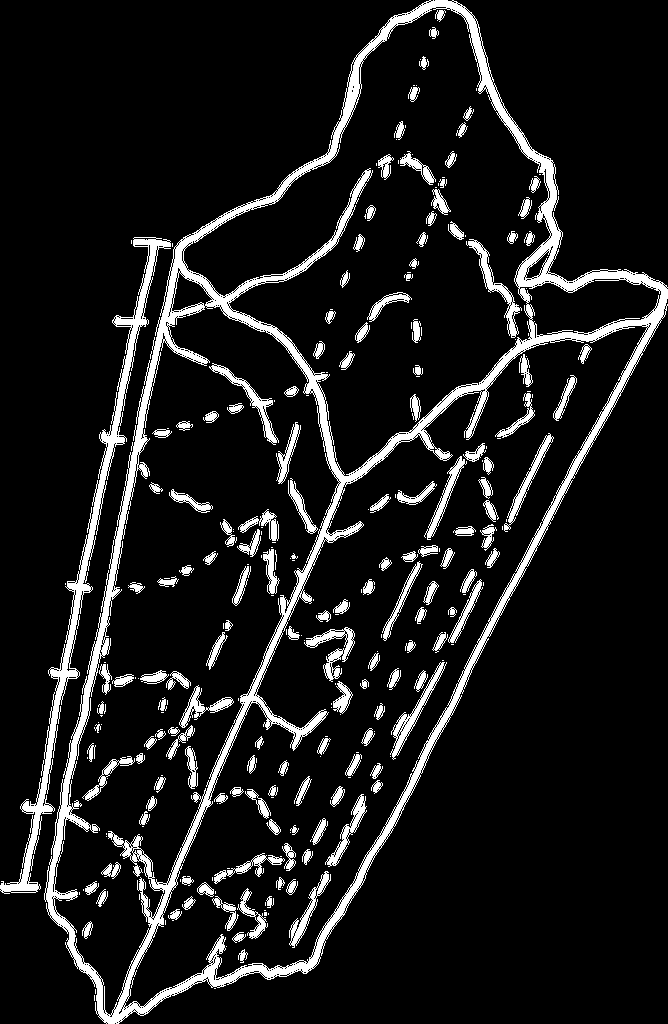
This project examines how influences from social and cultural changes are embedded into the physical morphology of cities, and whether these shifts can be observed, measured and compared through quantitative spatial analysis.
The project aims to develop a methodology for isolating these temporal layers of urban development and addition, quantifying their characteristics and computing an "influence factor" to measure their physical imprint in shaping urban form.
When cultural forces collide through colonization, ideological planning, globalization or policy regimes they leave traces in street networks, block typologies and land-use patterns, which outlast the system in which they were established upon.
Two primary case studies: Cities in the United States, examining policy-driven homogenization. Seoul, South Korea, examining successive cultural traces from dynastic, colonial and modernization eras.
The spatial typology and configuration of cities is the fundamental, and largest influencer and contributor to the social networks and behavior that ultimately dictate the city's lived experience and culture. [1,2]
Whether or not the city naturally developed through organic settlements, or was directly imposed as a part of a top-down approach, the form of a city reflects cultural and social ideas at the time. [3,4,5]
The forms, therefore, may be assorted based on how they appear visually — but this cannot be a complete filter to analyze cities. These typologies would be highly contextual.
Urban form is the visual representation of lived experience that continues to respond to itself and evolve. Whether it be rapid growth, decay, or degrowth, typologies evolve. [7,8]
When two different cultures collide they influence each other, and if one culture, or civilization, or city, dominates the other, this is reflected in redeveloped, or newly expanded cities through planning policy and ultimately form. [9,10]
The natural encoding of cultural values onto urban form have been observed in previous research. McIntosh (2021), in the case of urbanization in Mali, describes a classic example of heterarchical urbanism: the spatial logic of a city as a direct reflection of social organization.
Sjoberg (1955) argues that the preindustrial city's spatial structure is ultimately shaped by its economic relationships to surrounding territories.
The contrast between organic settlement patterns and imposed top-down systems have been documented throughout civilizations from Mesopotamia (Emberling 2015) to Mesoamerica (Manzanilla 1995).
Caldeira documents that in 1990s Sao Paulo, mechanisms to keep rich and poor apart became more elaborate even as physical distances decreased — reflecting rapid globalization producing new spatial logics on older ones. Wei (1998) illustrates Chinese ethnoburbs in Los Angeles as entirely new settlement typologies. Low (2001) observes that gated communities create new forms of exclusion through cul-de-sacs, disconnected networks and walled perimeters.
By computing changes in street connectivity across 134 countries since 1975, Barrington-Leigh and Millard-Ball (2020) found that streets in new developments in 90% of countries have become less connected, identifying persistence in street-network sprawl indicative of path-dependent processes. The Street Network Disconnected Index (SNDi) is a scalable metric for temporal comparison. [1]
Salazar-Miranda et al. (2022) developed five morphological metrics for informal settlements — street width, elevation, facade heterogeneity, density, and street canyon ratio — demonstrating the capability to transform urban form into a quantifiable metric at scale using LiDAR. [2]
The Urban Visual Intelligence Framework (Zhang et al, 2024) reveals that physical environment features, extracted from street-level imagery, show variance in poverty, crime, travel behavior and health outcomes. [3]
Lemoine-Rodriguez et al. (2020) classified 194 cities into four distinct urban types — compact-grey, transitional, ragged-small and fragmented-complex — finding that cities have followed a trend towards more homogeneous urban forms, directly supporting the homogenization hypothesis. [4]
Seto et al. (2011) established the core framework for tracking urban expansion through remote sensing. The Urban Land Teleconnections Framework (2012) emphasizes that urban expansion effects extend beyond city boundaries through agricultural land conversion, food system disruption, and climate spillovers. [5,6]
Burchfield et al. (2006) measured sprawl through remote sensing on an imposed grid to quantify undeveloped land surrounding urban settlements. [7]
A causal link between redlining policies of the 1930s and present-day climate vulnerability in urban areas has been identified by Salazar-Miranda et al. (2024): areas marked as less desirable for investment face disproportionately higher current and projected risks of flooding and extreme heat due to diminished environmental capital including reduced tree canopy and lower ground surface permeability. [1]
This displays that urban form, once instilled, suffers from persisting changes for nearly a full century, even when the cultural and civic norms have long developed onwards.
Athey et al. (2021), using GPS data from 5% of the U.S. population, showed that experienced isolation is lower relative to residential isolation in denser, wealthier cities with high public transit use — pointing to a correlation between form characteristics and measurable equity outcomes. [2]
South Korea
With documented history spanning nearly two millennia, Seoul provides a rich case for researching cultural layering in urban form. The city's most recent cultural-political regimes each produced identifiable urban development.
Rather than dividing the temporal scale by administrations, this research proposes marking periods by large inflection points of "civic collision": first highway and subway system opening, 1988 Olympics, district formation — which better captures rapid social transformation and its spatial consequences.
United States
A U.S. based analysis examining how successive policy regimes, backed by distinct cultural and political agendas, have driven urban form towards homogeneity. Target cities include New York City, Boston, Chicago, Los Angeles, Houston, Washington D.C., San Francisco, Tampa and New Orleans.
Salazar-Miranda and Talen (2025) demonstrates the feasibility of analyzing zoning codes at scale using NLP, showing that form-based codes are associated with higher floor-to-area ratios, narrower street setbacks, smaller lot sizes, improved walkability, and shorter commutes. [1]
Framework can be extended to Soviet-era cities, Marshall Plan rebuilds, West/East Germany, and U.S.–Mexico border cities.
Identification
Splitting each period into spatial layers based on policies, ordinances, movements, wars, or natural disasters, dissecting temporal layers to find spatial differences.
// Primary challenge is data availability. OpenStreetMap data lacks temporal metadata.
Leveraging multi-temporal geospatial datasets with known provenance: U.S. Cities — HISDAC-US (building-level, first-built-year); OpenStreetMap snapshots tracking connectivity changes since 1975. Seoul — Korean National Geographic Information Institute historical archived maps with georeference capability.
Extraction
A three-level metric framework drawing from Salazar-Miranda et al. (2022), Barrington-Leigh and Millard-Ball (2020), and Lemoine-Rodriguez et al. (2020).
// Metric framing needed
- Street Network Disconnectedness Index (SNDi)
- Intersection density (nodes per sq. km)
- Average circuity (ratio of network distance to Euclidean distance)
- Proportion of dead-ends vs 4-way intersections
- Average block perimeter and area
- Average street width
- Street canyon ratio (building height to street width)
- Block shape regularity index (deviation from rectangular grid)
- Building footprint coverage ratio
- Facade heterogeneity index
- Patch density and edge density
- Land-use mix entropy
- Green space ratio and tree canopy coverage
- Impervious surface percentage
// Traffic flow used as a dependent variable in Phase IV
Computation
Per-Layer Morphological Profile. For each temporal layer L_i, compute full vector of Tier I–III metrics across all blocks and segments within that layer, producing a morphological profile.
Compute morphological distance between layers using the Mahalanobis distance, producing a single scalar measurement of morphological difference from each layer to its predecessor.
Weighting by Spatial Extent. Multiplying distance by proportion of city area added in the layer. Unweighted as primary measure of cultural divergence, weighted as secondary measure of aggregate impact.
// Dimensional consistency needed. Defining city boundary. Multi-metric morphological distance measurement needed.
Correlation
Identifying the boundary of each neighborhood block that was newly constructed and geometric centroid of each neighborhood. Establishing a voronoi diagram within city boundaries guided by pre-existing streets.
// Viability of calculating euclidean distance between voronoi centroid and neighborhood centroid, divided by ratio of cell size?
Computing walk-time accessibility to essential services for each temporal layer. "Differences in access to local amenities can explain 84% of the variation in 15-minute usage across urban areas." Abbiasov et al (2024). [1]
Random forest models best predict urban temperatures using LiDAR-derived datasets (Voelkel and Shandas, 2017). Urban expansion substantially intensifies nighttime heat stress by approx. 1°C on average, 2–3°C for mega-urban regions (Huang et al. 2021). [2,3]
Hsu et al. (2021) writes that the average person of color lives in a census tract with higher urban heat island intensity than non-Hispanic whites in all but 6 of the 175 largest urbanized areas — suggesting that morphological layers produced by discriminatory policies carry lasting thermal signatures. [4]
Testing whether physical boundaries between temporal layers correlate with present-day indicators of marginalization: poverty, reduced tree canopy, infrastructure underinvestment. Boundary-design methodology for redlining used by Salazar-Miranda et al. (2024), comparing properties on either side of historical boundaries, provides a causal identification strategy. [5]