Mediums of Speculation: Seoul
Yukjo Street / Gwanghwamun Corridor, Seoul, South Korea — 1395 to present
I have been inherited the space I live in.
I turn the faucet on,
Ride the train,
and live in buildings without knowing how they work.
My neighbors come from places I've never been to.
Life goes on.
Each of us
Lives in a different city
Collective memories and contributions
Expand, replace, and continue
The city breathes in and out,
Embedded cultural bones.
Blood flows in the city;
It swells, bloats, and rots.
Blood flows in the city;
It blooms, stretches, and grows.
Where I stand today was a different place.
My home will be someone else's.
Even when I'm gone, the city changes
And the memory of what was once there
Continues to refresh itself in our minds.
the Joseon capital
Before 1394, the site was peripheral farmland at the foot of Bugaksan mountain, within the old Hanyang-bu county. The Goryeo Dynasty (918–1392) ruled from Kaesong to the north. When Yi Seong-gye founded the Joseon Dynasty in 1392, the geomancer Muhak and the neo-Confucian scholar Jeong Do-jeon debated the placement of the new capital. Jeong Do-jeon won: the main palace, Gyeongbokgung, would face south according to the Zhou Li principle, with Bugaksan as its backing mountain.
Jeong Do-jeon personally planned the capital's street system in 1395. He named each office along the main southern avenue: Yukjo-geori, the “Street of Six Ministries” — Ijo (Personnel), Hojo (Revenue), Yejo (Rites), Byeongjo (Military), Hyeongjo (Justice), and Gongjo (Works). The Uijeongbu (State Council) anchored the northern end near the gate. The Saheonbu (Office of the Inspector-General) and Hanseongbu (Seoul Prefecture) occupied the west side. The street was not merely administrative — it was a spatial argument for neo-Confucian governance, each ministry placed in a cosmologically prescribed position.
This arrangement persisted essentially unchanged for over five centuries. The street was narrow — perhaps 10 meters wide — with low wooden buildings, tile roofs, and open sky above. Bugaksan was visible from every point along its length.
600 meters, 600 years
An artistic representation of how a specific area in a city was perceived differently over time — replanned, adjusted, and altered based on regime changes, policy, and cultural shifts. The target is a ~600m stretch of present-day Sejong-daero from Gwanghwamun Gate south to the Sejong-ro intersection: a place that was an urban center from the Joseon Dynasty, through Japanese Occupation, through the Korean War, through urban renewal, to today.
No other block in Seoul has this density of documented, layered transformation. This is literally a site where you can see through the archaeological layers — Joseon government offices buried under a Japanese colonial grid, covered by a post-war highway, now partially re-excavated. The sky-to-building ratio has undergone extreme transformation: from low wooden structures with open sky, to massive colonial edifice, to highway canyon, to partially reopened public square.
| Era | What Stood Here |
|---|---|
| 1395 — 1910 | Yukjo Street (“Street of Six Ministries”) — Uijeongbu, the six ministries, Saheonbu, Hanseongbu. Narrow traditional street, wooden government buildings, open sky. |
| 1912 — 1945 | Joseon buildings demolished. Street widened to 62m as Taihei Boulevard with tram tracks. Government-General Building (largest in East Asia) constructed 1916–1926, blocking Gyeongbokgung. Gwanghwamun Gate relocated east. |
| 1950 — 1953 | Gwanghwamun's wooden portions burned completely. Heavy war damage throughout. |
| 1960s — 1990s | 1968: Gwanghwamun rebuilt in concrete, facing wrong direction. 16-lane highway. Government-General Building repurposed as National Museum (1986). |
| 1995 — 2010 | 1995–96: Government-General Building demolished. 2006–10: Gwanghwamun restored to original position. 2009: Gwanghwamun Square created, lanes reduced to 10. |
| 2020 — present | Archaeological excavation uncovered 26 Joseon-era building sites beneath the road. Saheonbu ruins preserved in situ underground. Square expanded 1.7x, road reduced to 6 lanes. |
Scroll to traverse time
Each map below is cropped to the same geographic area — the ~600m corridor from Gwanghwamun Gate south through Yukjo Street. As you scroll, the view holds steady while the cartographic layer changes beneath it. What shifts is not the vantage point but the regime, the surveyor, the technology, and the intention behind the act of mapping. The same ground, drawn by different hands, for different purposes, across six centuries.
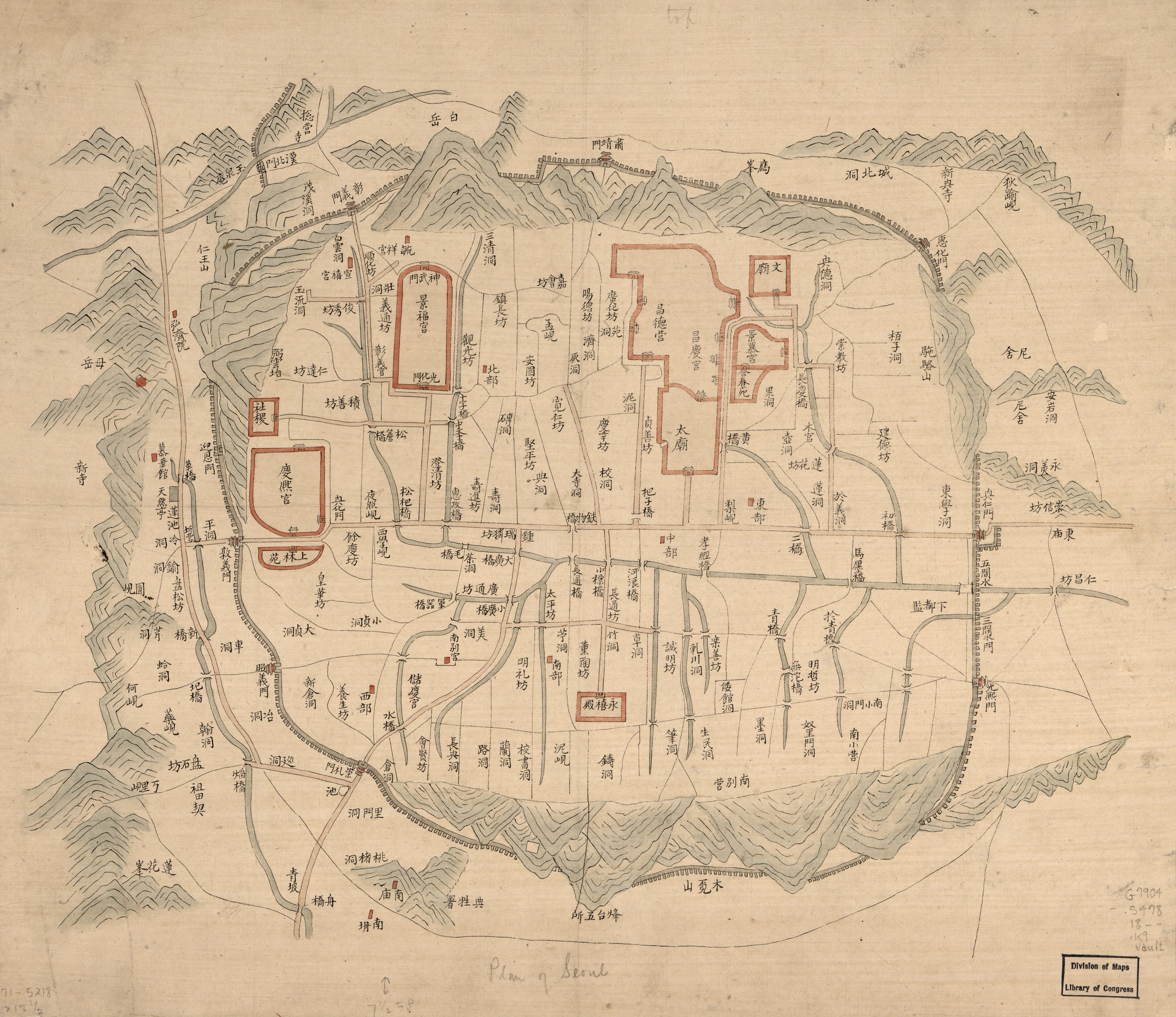
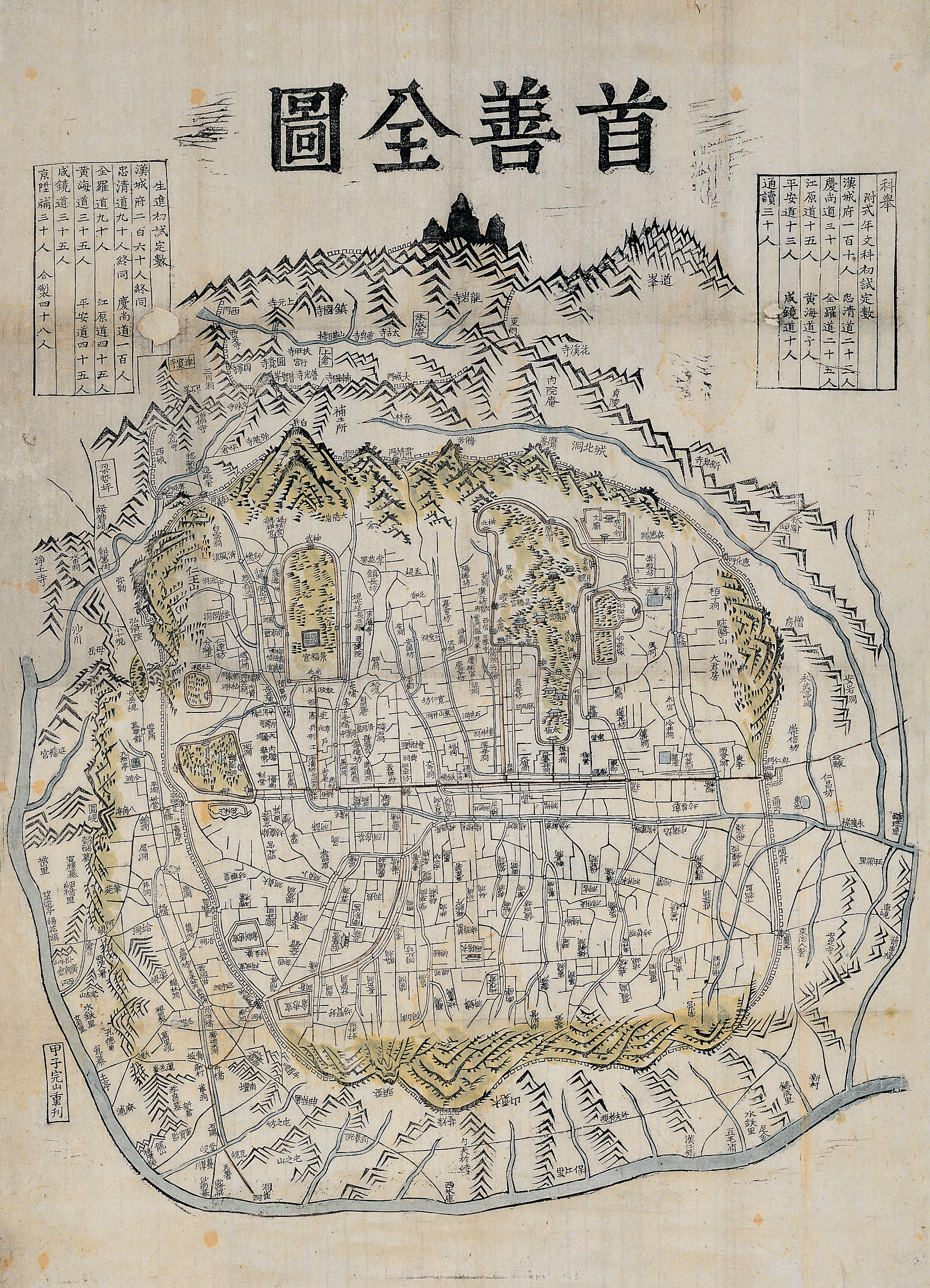
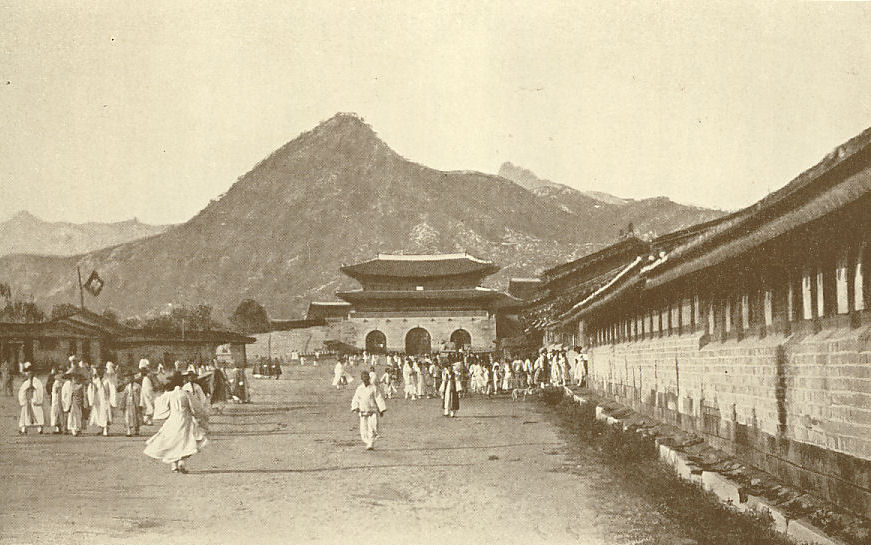
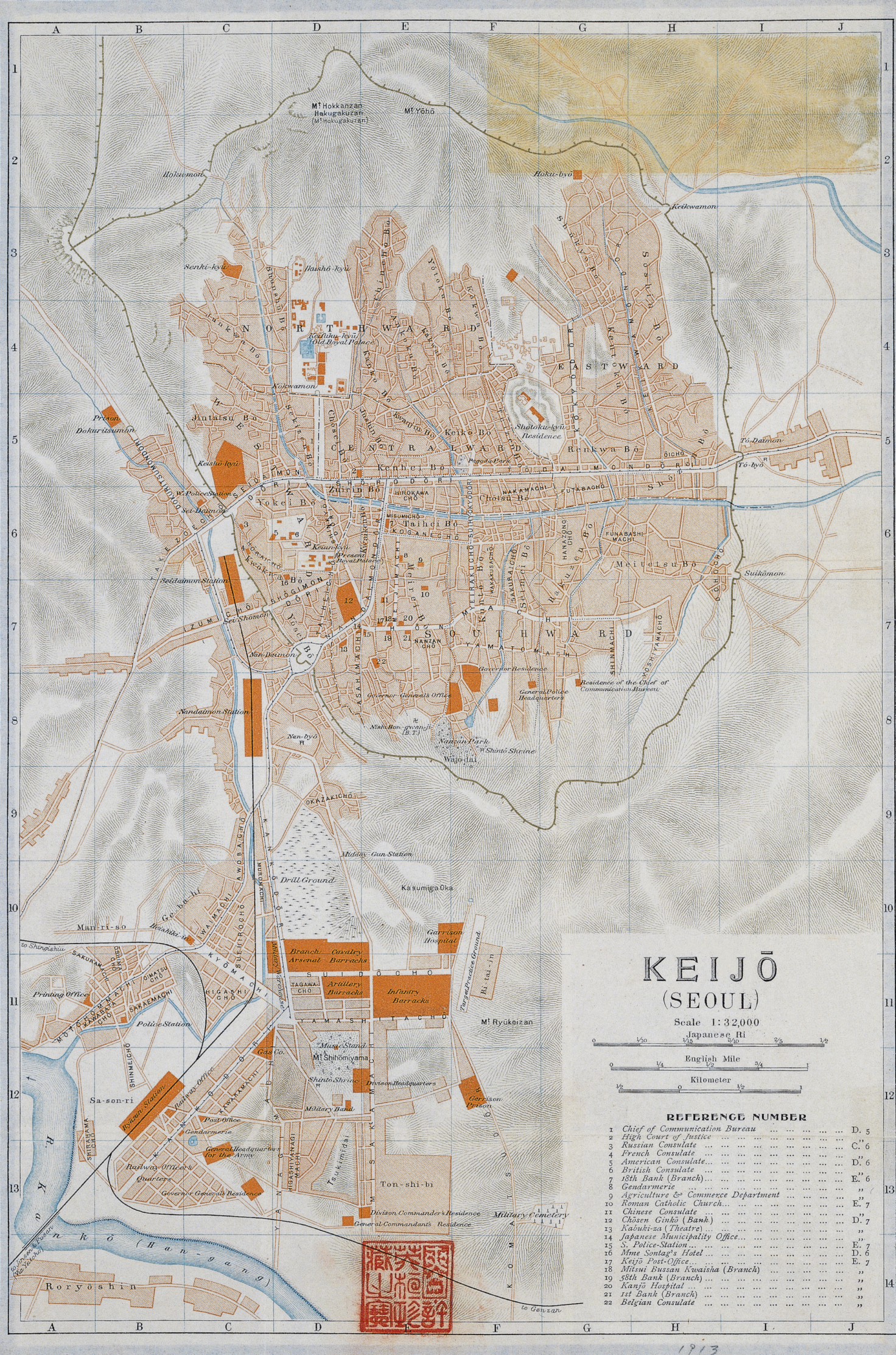
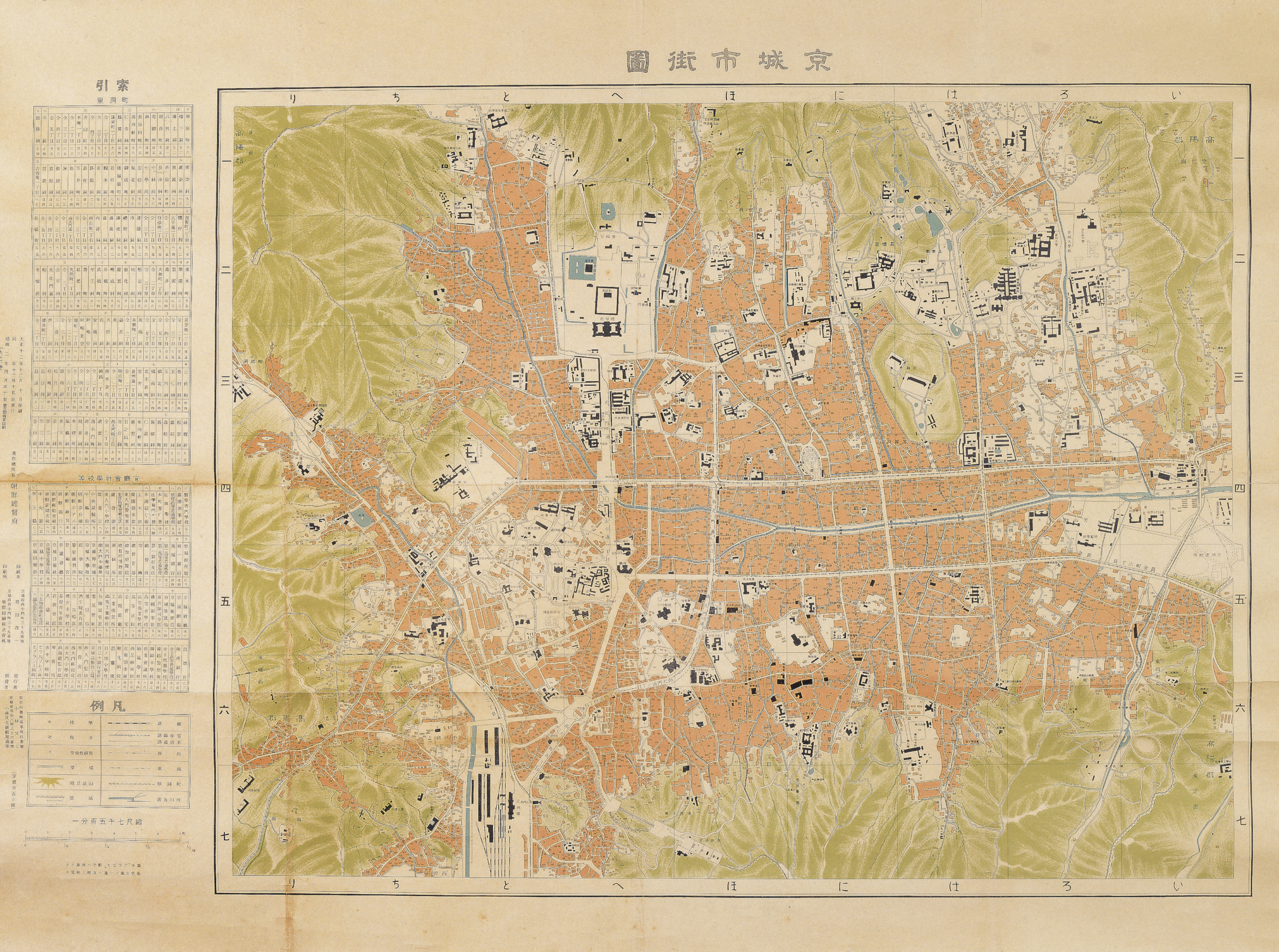
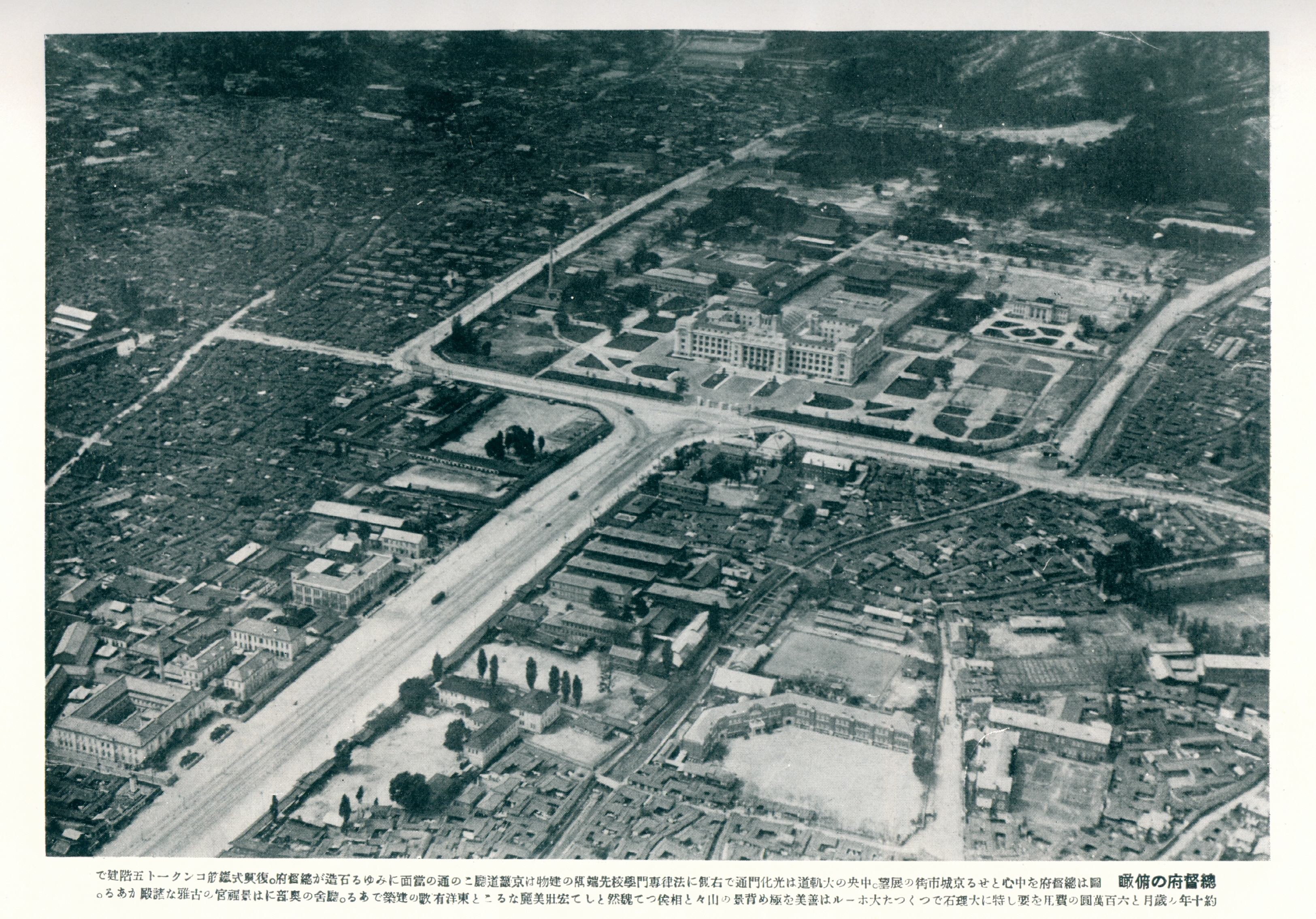
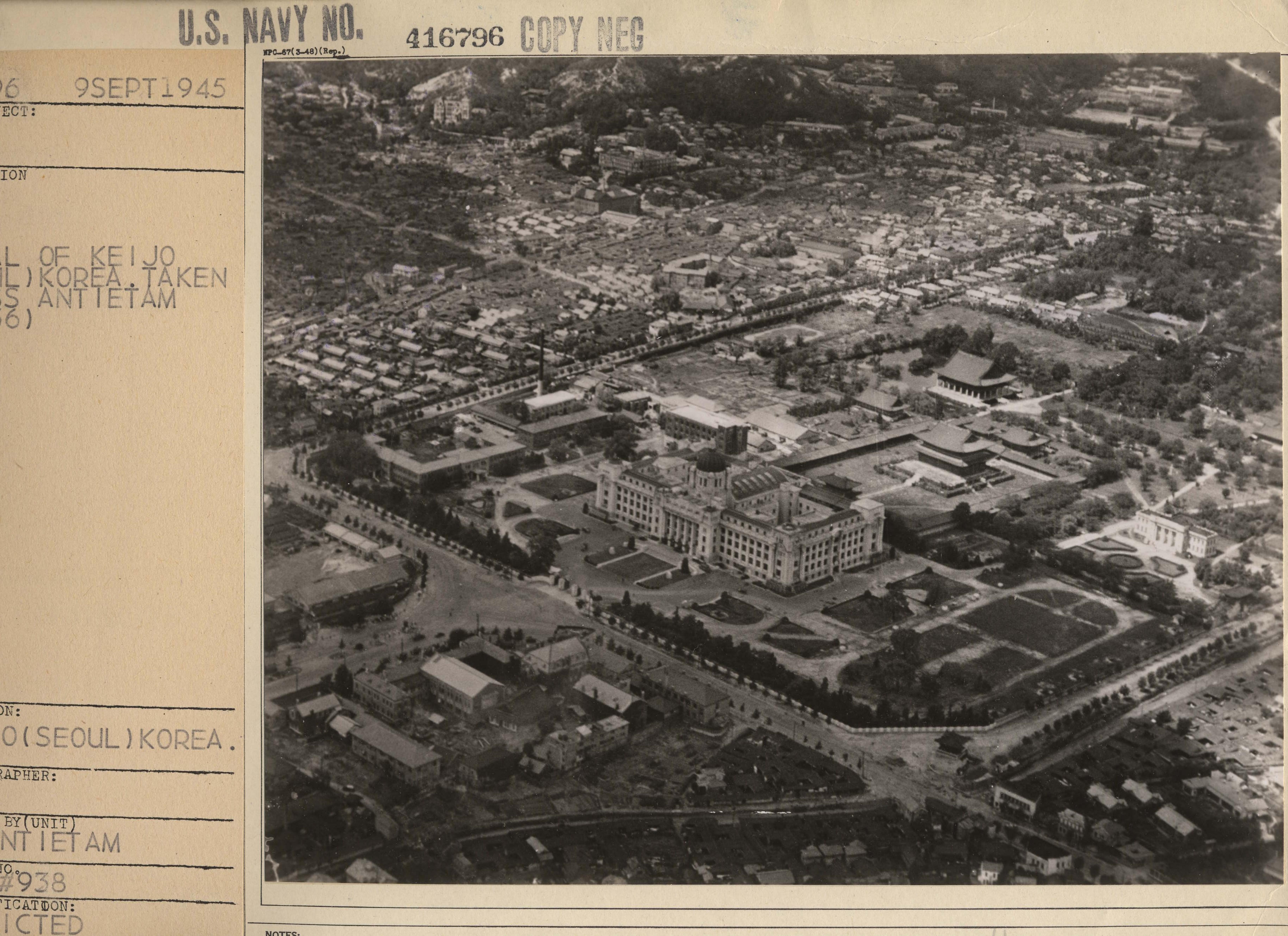
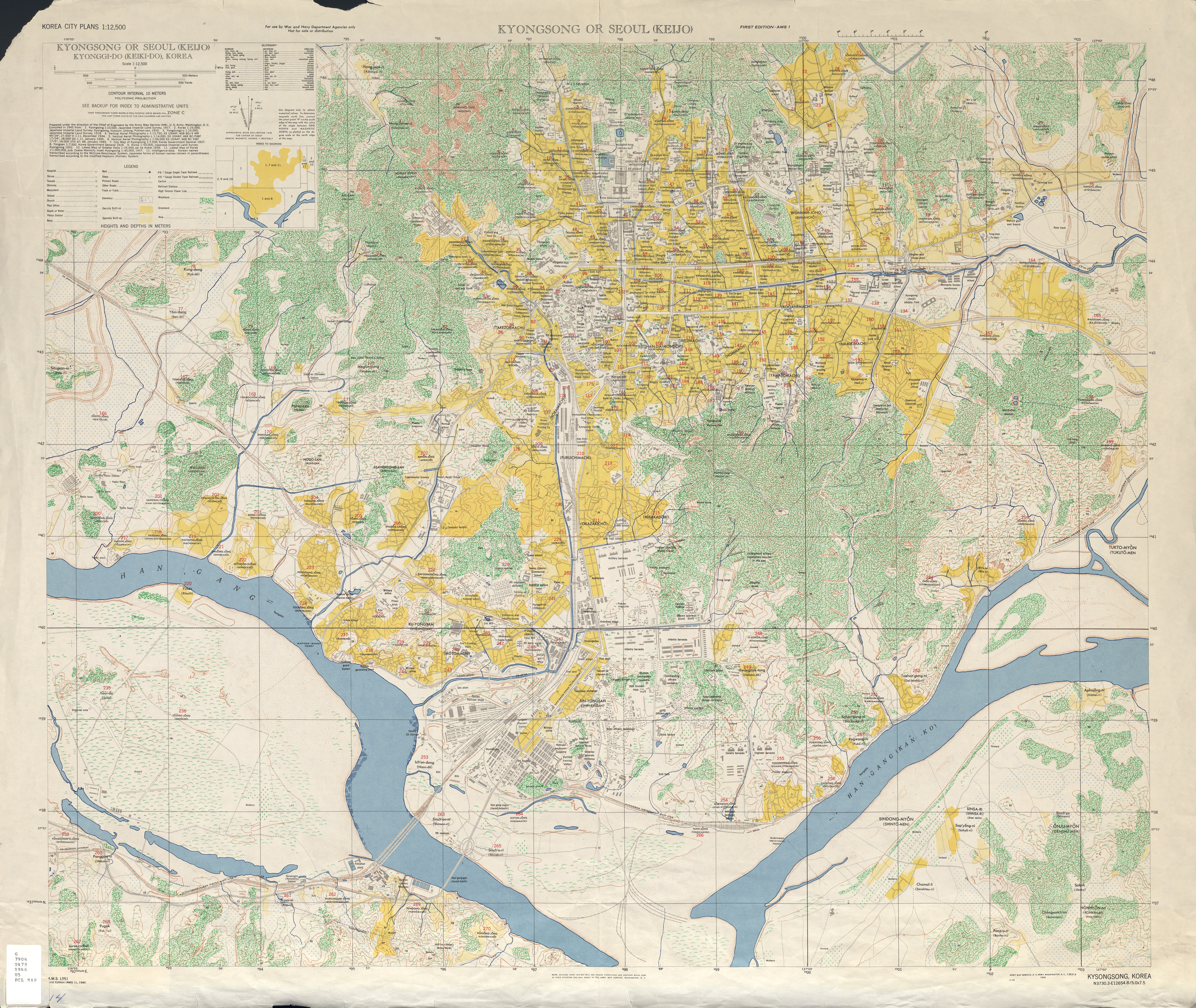
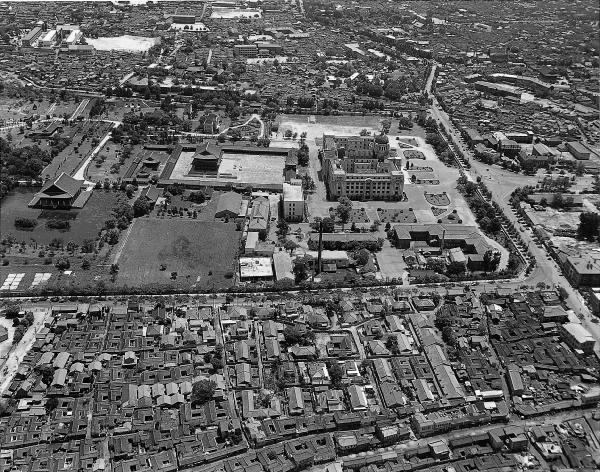
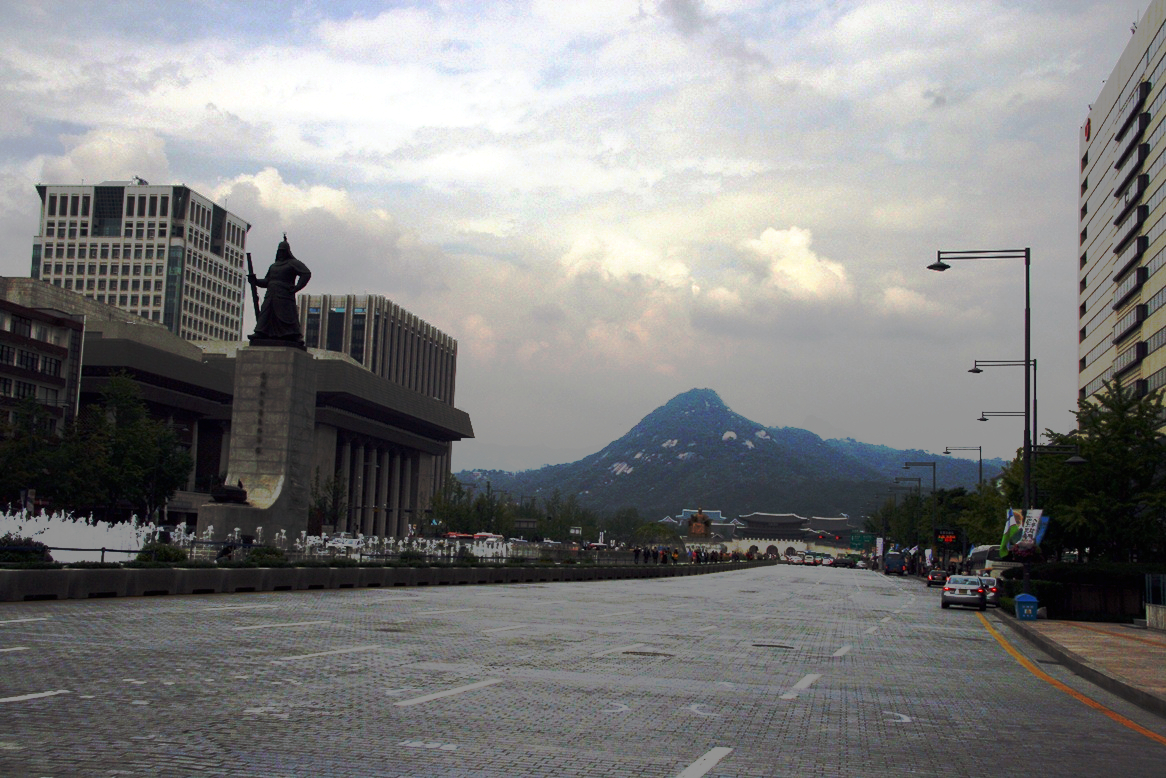
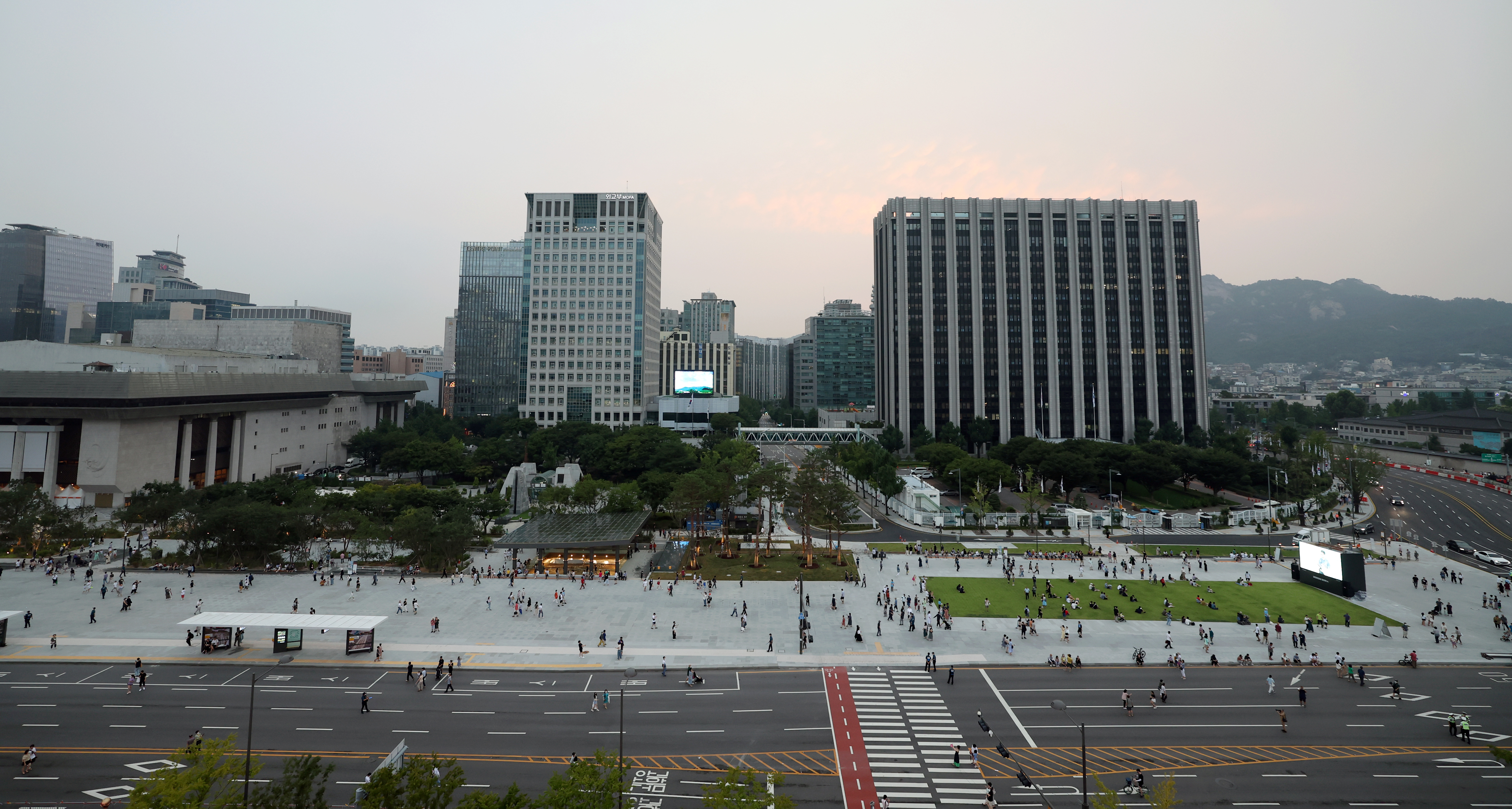
Isabella Bird Bishop — Korea and Her Neighbours (1898). Four visits 1894–1897. Seoul streets, palaces, Gwanghwamun area.
Percival Lowell — Choson, the Land of the Morning Calm (1885). Palace interiors, gates, street life.
Joseon Wangjo Sillok — Annals of the Joseon Dynasty, 1392–1910. 1,893 volumes. Capital street system, royal orders.
Dongguk Yeoji Seungnam — Comprehensive geographical encyclopedia (1481/1530). Hanyang layout, buildings, walls, gates.
Todd A. Henry — Assimilating Seoul (UC Press). Colonial public space, focused on this axis. Sejong Prize winner.
| Archive | Holdings |
|---|---|
| Library of Congress | Carpenter, Foulk, Underwood collections; maps from 1760–1946 |
| Seoul History Archive | 26,131+ items: maps, photos, excavation records |
| Seoul Photo Archive | 98,896 photographs, 1950s–1980s |
| E-Kyujanggak (SNU) | 220+ types of old Korean maps (~6,000 sheets) |
| National Archives of Korea | Government records, cadastral maps, photographs |
| Virginia Tech Colonial Seoul GIS | Georeferenced 1936/1938 maps with ESRI shapefiles |